






UN News - Global perspective Human stories
Global perspective Human stories
-
Ukraine: UN alarmed by reports of deadly strike on dormitory in occupied Luhansk
The United Nations voiced alarm on Friday over reports of an overnight attack on a vocational school and dormitory in the town of Starobilsk in Ukraine’s Luhansk region which killed and injured multiple civilians, including children.
-
World Urban Forum backs ‘Baku Call to Action’ on global housing crisis
A landmark gathering of more than 57,000 participants – the largest in the history of the World Urban Forum – closed on Friday in Baku with an urgent call to rethink how the world houses its people, as a new roadmap urges governments, cities and communities to act collectively on a crisis affecting billions.
-
Security Council LIVE: Human cost of Ukraine war, a pattern that ‘defies’ international law, says senior UN aid official
The Security Council is meeting at the request of Russia which on Friday accused Ukraine of targeting a student dormitory overnight in the occupied Luhansk region, reportedly killing six people – including children – and injuring dozens. Kyiv has denied targeting the civilian building, saying it had struck a Russian military drone command headquarters, according to news reports. Follow live coverage below and for full meetings coverage of the council, click here.
-
Ebola risk ‘very high’ in eastern DR Congo as UN intensifies response
The UN is rushing emergency personnel, funding and supplies into eastern Democratic Republic of the Congo (DRC) to counter the fast-growing Ebola outbreak spreading through conflict-ravaged provinces.
-
Gaza: Life-saving medicines blocked as killing continues, disease gains ground
Dire conditions in Gaza marked by continuing violence, rodent infestations and the spread of infectious disease are being made worse by blockages of essential medical supplies, UN agencies warned on Friday.
-
Right to strike protected under key labour treaty, says UN World Court
The UN International Court of Justice (ICJ) on Thursday ruled that the right to strike is protected under a core International Labour Organization (ILO) convention, in a landmark advisory opinion settling a long-running dispute between workers and employers worldwide.
-
Haitian children ‘paying the highest price’ amid surge in gang recruitment
As gangs continue to “terrorise” communities in Haiti, children are the ones paying the highest price, the UN Special Representative for Children and Armed Conflict warned on Thursday.
-
Gaza risks ‘permanent’ state of limbo if transition plan stalls, Security Council hears
As Gaza’s fragile ceasefire frays and humanitarian conditions deteriorate, a senior UN envoy warned the Security Council on Thursday that delays in implementing the Council-backed transition plan for the enclave will only increase suffering and undermine recovery.
-
UN agencies step up Ebola response in eastern DR Congo
United Nations agencies have moved swiftly to support efforts to contain the latest Ebola outbreak in eastern Democratic Republic of the Congo (DRC), delivering emergency medical supplies, protective equipment and logistics support.
-
War is becoming a death sentence for women and girls
Thirteen-year-old Mona still remembers the moment the second airstrike hit.
-
Building the smart city: Promise, pitfalls and the people at its heart
From AI-powered transit systems to digital twins and flood-proof parks, cities are embracing technology at an unprecedented scale. But as innovation accelerates, experts warn that inclusion, trust and security will determine who truly benefits.
-
Security Council LIVE: Ambassadors debate future of Gaza amid stalled progress on lasting peace
The Security Council is discussing the stalled progress in Gaza as the fragile ceasefire there limps on, and deteriorating conditions across the West Bank amid continued civilian casualties and mounting humanitarian needs. Discussions are likely to focus on who governs Gaza, and how - with no disarmament in sight, together with efforts to support recovery.
-
General Assembly backs historic World Court climate crisis ruling
A landmark General Assembly resolution adopted on Wednesday is “a powerful affirmation” of international law, climate justice and science, according to UN chief António Guterres.
-
World News in Brief: Lives lost and aid destroyed in Ukraine, rainfall alert for Horn of Africa, $710 million appeal for Rohingya refugees
The Representative of the UN refugee agency, UNHCR, in Ukraine has strongly condemned the deadly and destructive Russian missile and drone strikes in Dnipro on Tuesday night.
-
Guterres condemns Israeli move to militarise seized compound in occupied East Jerusalem
UN Secretary-General António Guterres on Wednesday strongly condemned Israel’s decision to establish military facilities at a seized UNRWA compound in occupied East Jerusalem, calling the move “wholly unacceptable”.
-
30,000 people flee fresh violence in Haiti as hunger crisis deepens
Around 30,000 people have had to flee their homes in the Haitian capital Port-au-Prince and surrounding areas following a new wave of violent attacks and atrocities perpetrated by armed gangs over the past ten days.
-
Ebola outbreak: ‘Every epidemic begins in a community and ends in a community’
Facing a fast-moving Ebola outbreak caused by a rare strain of the virus, the World Health Organization (WHO) is relying on a rapid, community-centred response to halt transmission in eastern Democratic Republic of the Congo (DRC) and Uganda, a senior official has told UN News.
-
Flak jackets and final goodbyes: Lebanon’s first responders under fire
Before heading to strike sites in war-torn Lebanon, rescue workers and paramedics often say goodbye to one another – a ritual captured in widely shared videos reflecting the growing dangers faced by aid workers since hostilities between Hezbollah and Israel erupted on 2 March.
-
Security Council reform ‘is absolutely essential’: Guterres
The UN Secretary-General on Wednesday underscored the need to effectively re-open the Strait of Hormuz and expand UN Security Council membership to curb the impunity of veto-wielding “superpowers”.
-
Security Council LIVE: Civilians in conflict under spotlight amid rising global toll
The Security Council is meeting in New York for its annual open debate on the protection of civilians in armed conflict amid mounting concern over rising civilian casualties, attacks on humanitarian workers and widespread destruction of homes and critical infrastructure in wars around the world. The UN's top humanitarian for crisis response told ambassadors one civilian was killed every 14 minutes last year. Follow live below from our Meetings Coverage team.
-
Ebola risk is high inside DR Congo but it’s no pandemic emergency: WHO
The deadly Ebola outbreak in Democratic Republic of the Congo (DRC) and Uganda does not represent a global pandemic emergency, although the risk is high at a regional and national level, the UN health agency chief said on Wednesday.
-
Star-studded refugee football team takes the pitch for UN
A symbolic team of famous footballers with first hand experience of life as a refugee was announced on Tuesday by UNHCR, just weeks ahead of the world’s biggest sporting event - the FIFA Men’s World Cup.
-
World News in Brief: Geopolitical tensions impact global economy, Gaza aid funding shortfall, violence in South Sudan, UN condemns deadly mosque attack
The global economy is entering a more fragile period as geopolitical conflicts, rising energy costs and financial instability threaten global growth and trade.
-
Security Council LIVE: Concerns grow over nuclear safety after UAE drone strike
The UN Security Council is meeting in emergency session in New York to discuss the situation in the Middle East following reports of a drone strike near the Barakah Nuclear Power Plant in the United Arab Emirates. IAEA Director General Rafael Mariano Grossi briefed members as concerns grow over nuclear safety and security in the region. Follow our live coverage below for updates and for coverage of all key meetings at UN Headquarters, go here.
-
How the Hormuz crisis keeps disrupting kitchens, ports and paychecks
The fragile ceasefire between the United States and Iran may have eased fears of a wider regional war, but persistent instability around the Strait of Hormuz continues to disrupt global trade, drive up energy costs and fuel a growing jobs and cost-of-living crisis.

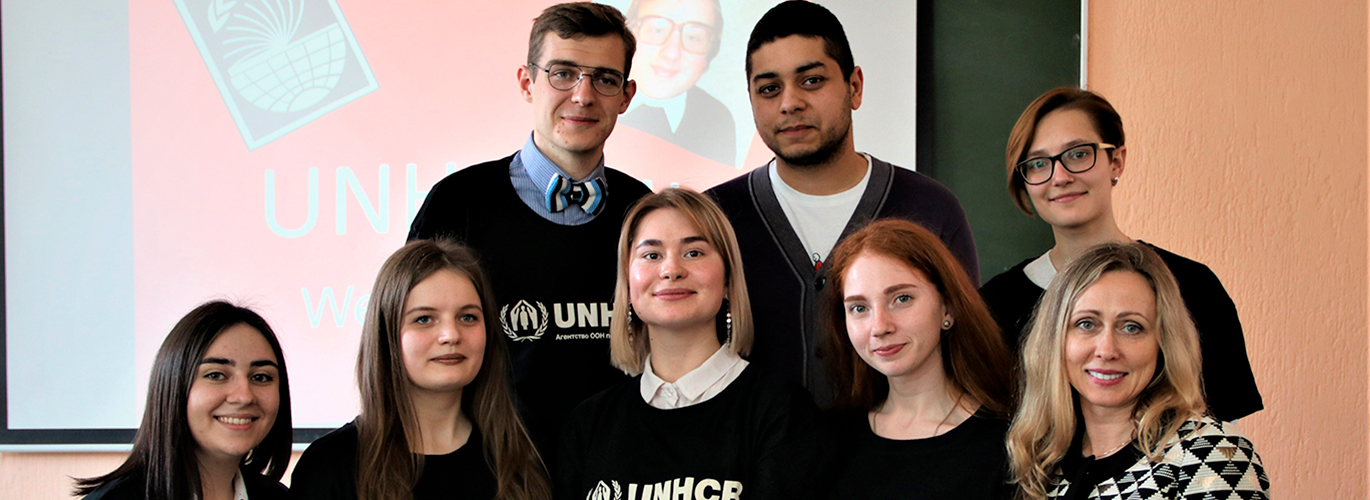
The “Refugee Problem” section is the first Russian-language Internet resource on this issue. It represents the results of our work in cooperation with the Office of the United Nations High Commissioner for Refugees. The section also presents the official documents and publications of the UN and UNHCR, magazines and bulletins on refugee issues, as well as information on refugees in Belarus and on projects, implemented to support the integration of refugees. In addition, in this section you can find materials on statelessness and migration.

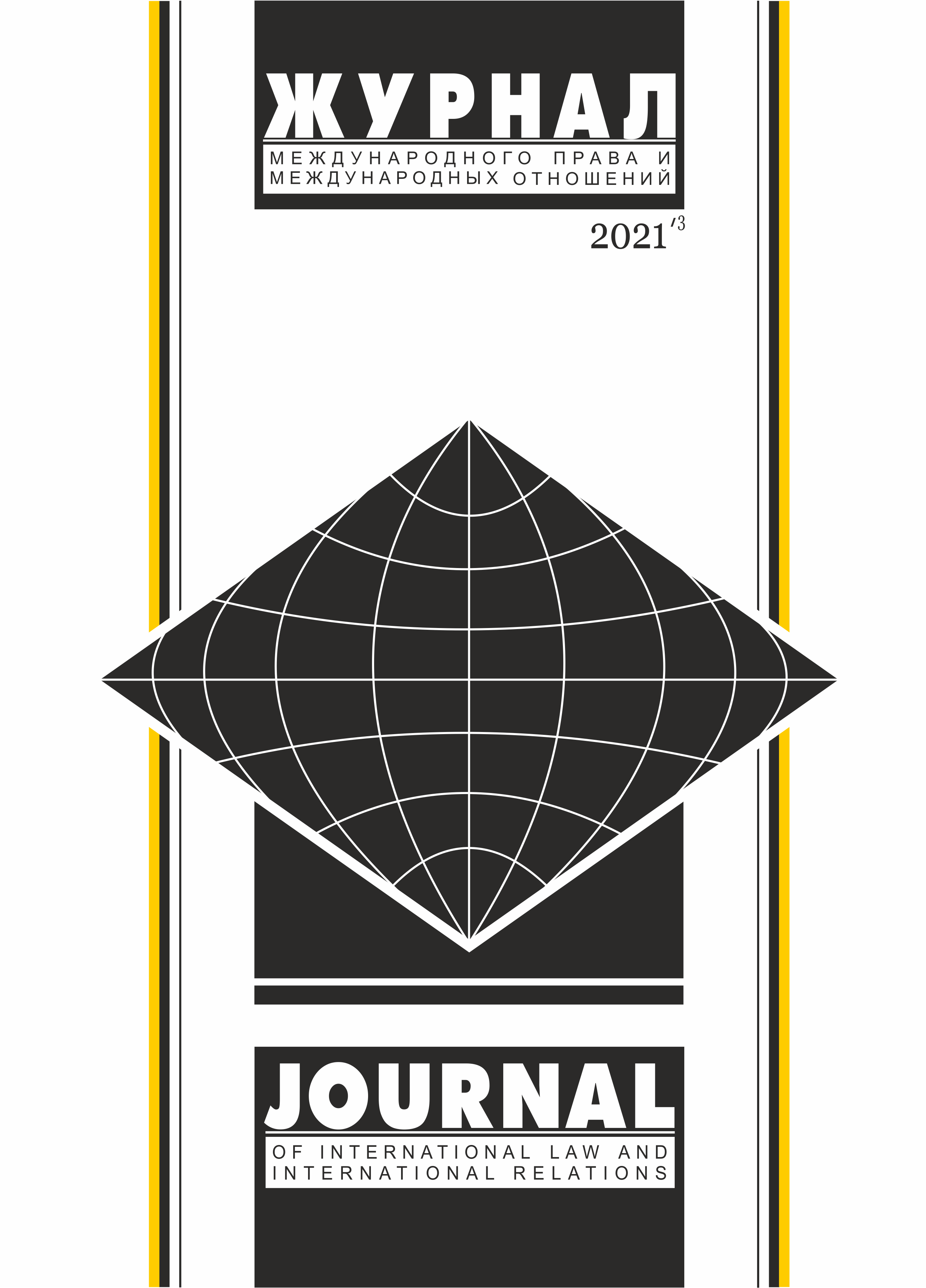
The Journal of International Law and International Relations, founded in 1996, is one of the leading scientific journals of the Republic of Belarus. The publication specializes in issues of foreign policy, international law and international economic relations.
The journal is included in the List of scientific works of the Republic of Belarus for the publication of the results of dissertation research in legal, historical and economic sciences.

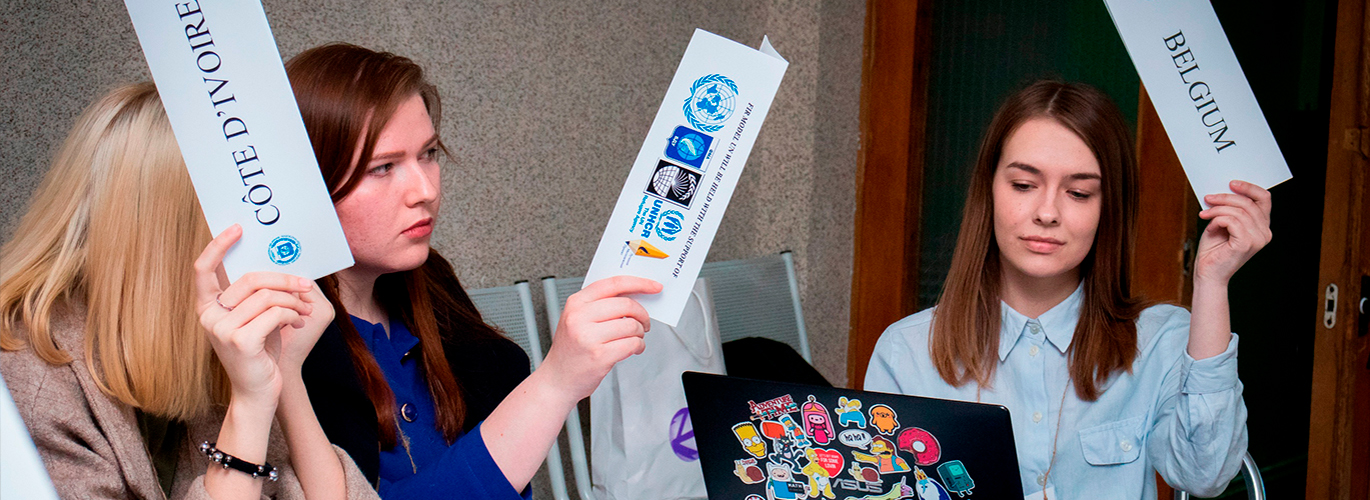
Model of the United Nations (MUN) is a combination of a conference and a role-playing game, during which the activities of this international organization are simulated. Each of the MUN participants is a delegate from one of the countries of the world and sits on one of the committees of the UN system that deals with certain issues. Model United Nations in Belarus has existed since 1999. It began at the Faculty of International Relations of BSU.
